
Mindfulness Monthly Memo | April Issue
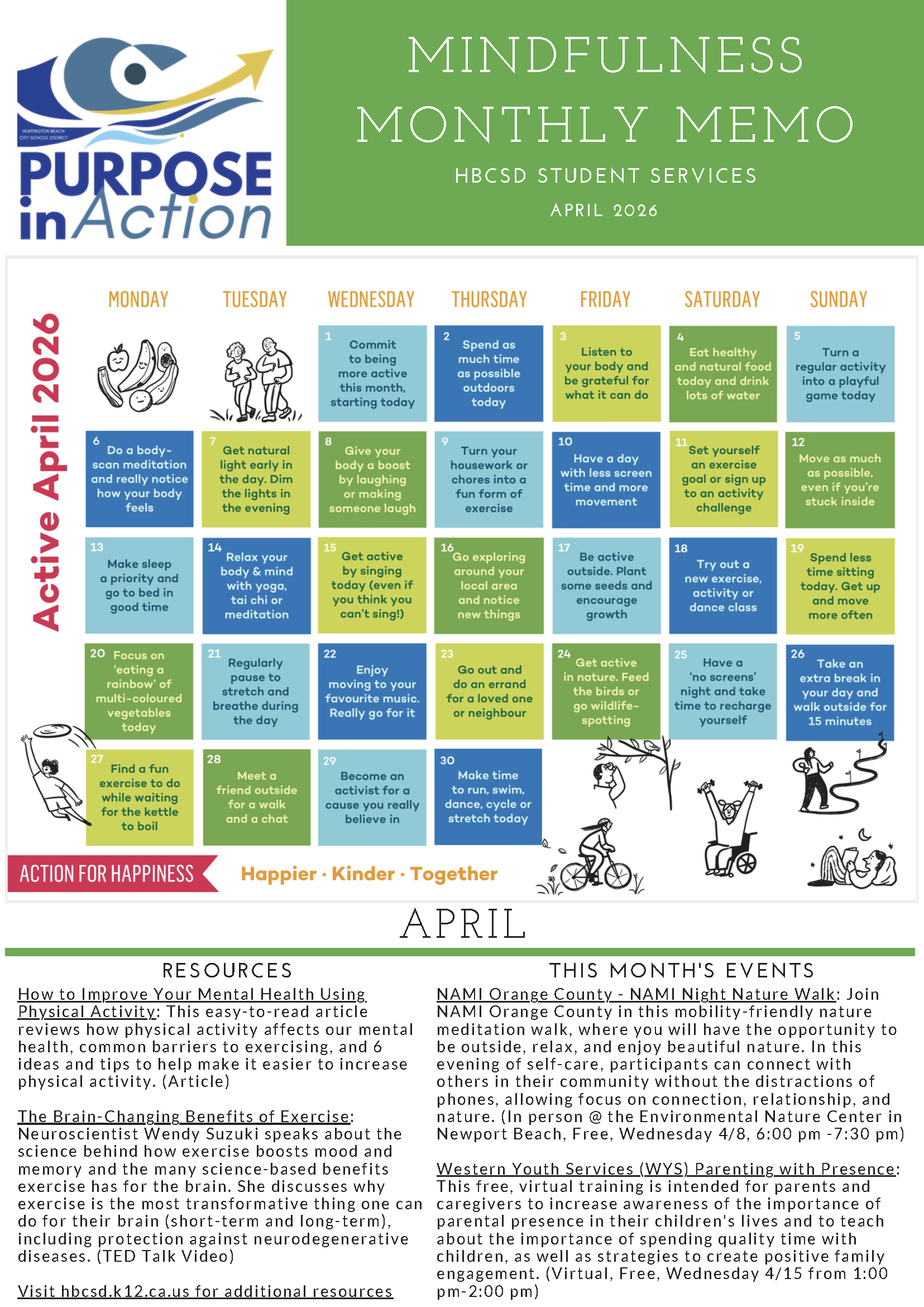
The theme of this month’s Mindfulness Monthly Memo is “Active April.” Many people know the benefits of exercise for the body, but did you know exercise also has tremendous benefits for the brain and mental health? According to research, moving your body and incorporating some sort of physical activity into your daily routine improves one's sense of well-being and relieves stress. Exercise and physical activity also have mental health benefits in children, with research suggesting that children should engage in at least 30 minutes of moderate exercise each day.
How does it work? Science shows us that exercise boosts the creation of new nerve cells in the brain, which supports neuroplasticity, or the brain’s ability to adapt to changes. Exercise increases neurotransmitter activity, including dopamine, serotonin, and norepinephrine, which are also known as our “feel-good” chemicals in the brain. Furthermore, activating the growth of brain cells can have positive effects on focus, memory, and overall mood. It can even lower symptoms of depression and anxiety and improve sleep.
Exercise also relieves the body's reaction to stress, also known as the fight-or-flight response. When we exercise, the physiological changes in the body mimic the fight-or-flight response, and therefore, exercise helps the systems in the body practice working together when dealing with stress. This also means that it helps your body to protect against the harmful effects of stress, including heart rate and blood pressure, the digestive system, and the immune system.
What can I do? Often, there are barriers to practicing daily exercise, such as busy schedules, feeling overwhelmed, being injured, or feeling out of shape. Luckily, there are some tips and tricks to overcoming these barriers, including:
Start slowly: Build your activity level gradually by doing less intensive exercises for a shorter amount of time, and then gradually build to more intensive exercises for a longer period of time. For example, maybe a 30-minute walk can build to a 45-minute jog, then to a 60-minute run. Go at your own pace with what works for your body!
Do what you love: There are many forms of exercise to choose from, and a gym or equipment is not necessary; the most important thing is that you enjoy the activity so that you stay motivated to stick with your goal. Examples include: walking, stair climbing, jogging, stretching, dancing, bicycling, yoga, taichi, swimming, weight lifting, and even gardening! Feel free to be creative, or ask a friend to join!
Mark your calendars: To help stick with your exercise goals, plan by scheduling your exercises at the start of each week.
Appendix